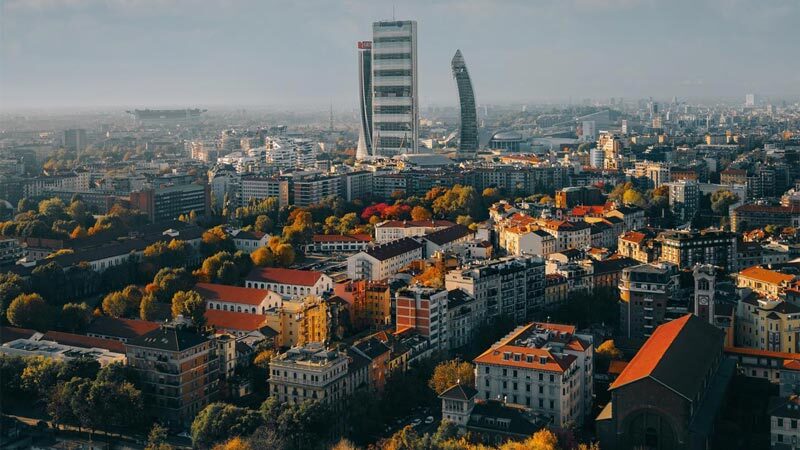

Milano City Guide

Created by Visa in partnership with YesMilano, this guide looks at Milano neighbourhood by neighbourhood – where the city’s character is felt most clearly. Each district has its own rhythm and attitude, shaped by history, culture, and daily life. From established quarters defined by art and architecture to areas driven by new creative energy, every neighbourhood offers a distinct view of the city.

Moving beyond the usual landmarks, the guide brings together recognisable icons and the everyday details that give each area its identity – local routines, familiar streets, and overlooked corners. The result is a layered portrait of Milano: a city defined not by a single story, but by many ways of seeing and experiencing it.

© YesMilano – All rights reserved

Navigli

Once a network of working canals linking Milano to the world, Navigli has reinvented itself as the city’s bohemian heart. Today, it’s all about aperitivo by the water, vintage markets, and golden-hour strolls over arched bridges. The neighbourhood feels at once lively and nostalgic: think cobblestones, ivy-draped façades, and the gentle clink of spritz glasses. Come weekends, crowds spill along the canals for people-watching and late-night chatter. Yet, wander a few side streets and you’ll find quiet corners steeped in old-world charm. Navigli captures that distinctly Milanese blend of grit and glamour, a place where history, design, and everyday pleasure meet effortlessly.

Iconic: The Navigli Canals & Darsena Basin - the social dock of Milano

Hidden gem: Vicolo dei Lavandai - a preserved open-air washhouse frozen in time.

EAT

El Brellin • Langosteria

SEE

MUDEC - Museo delle Culture • San Cristoforo sul Naviglio • Labirinto di Arnaldo 

DRINK

MAG Café • Backdoor 43

PLAY

Canal boat tour • Sunset bridge stroll

© YesMilano – All rights reserved

Brera

Brera is Milano’s most romantic and artistic quarter: cobblestoned, artsy, and impossibly photogenic. Once home to bohemians and painters, it still hums with creative energy, blending ateliers, art galleries, and flower-filled courtyards. It’s where past and present coexist gracefully: antique shops rub shoulders with sleek design boutiques, and old-school trattorias sit alongside trendy cocktail bars. Brera feels intimate but sophisticated, perfect for wandering without a plan. Even locals linger here for long lunches and late-night walks under fairy lights. If you want a snapshot of Milano at its most charming, cultured but never stiff, this is the spot.

Iconic: Pinacoteca di Brera - a masterpiece-packed art gallery.

Hidden gem: Orto Botanico di Brera - a tranquil botanical garden tucked behind the museum.

EAT

Al Matarel • Trattoria Torre di Pisa

SEE

Accademia di Brera courtyard • Via Fiori Chiari galleries • Pinacoteca di Brera

DRINK

Bar Jamaica • N’Ombra de Vin

PLAY

Stroll Via Brera • Antique-hunt on Via Madonnina

© YesMilano – All rights reserved

Sarpi / Chinatown

A world within Milano, Sarpi, often called Chinatown, pulses with colour, scent, and life. Centered around the pedestrian-only Via Paolo Sarpi, the area fuses Italian ease with Asian dynamism. Locals line up for hand-pulled noodles, neighbours gossip over espresso outside, and grocery windows brim with spices and teas. It’s less a tourist district and more a lived-in, evolving micro-city, cosmopolitan and community-driven. Come hungry: the food scene here is top-notch, from street-side dumplings to elegant dim sum. But Sarpi’s charm goes beyond the table - there’s a quiet pride in how seamlessly worlds blend here.

Iconic: Via Paolo Sarpi, Milano’s vibrant Chinatown spine.

Hidden gem: Cantine Isola, a century-old wine bar with poetry nights.

EAT

Ravioleria Sarpi • Chi Fa

SEE

Sarpi by night • ADI Design Museum

DRINK

Cantine Isola • Matcha and bubble tea shops

PLAY

Dumpling crawl • Browse Asian grocers for cooking (or picnic in Parco Sempione) supplies • Momi DIY&Photobooth

© YesMilano – All rights reserved

Isola / Porta Nuova

This is Milano’s skyline made tangible, where glass towers meet indie workshops, and green parks bloom between skyscrapers. Once gritty and industrial, Isola has transformed into a creative hub, full of energy and imagination. Wander its graffiti-lined backstreets and you’ll find record stores, ramen joints, and locals chatting on stoops; cross the footbridge into Porta Nuova and you’re suddenly in a futuristic Milano of design offices and vertical forests. It’s this contrast that defines the area: innovation with soul, where every street feels part of the city’s next chapter.

Iconic: Bosco Verticale, the forest-covered residential towers.

Hidden gem: Santa Maria alla Fontana, a peaceful 16th-century church with a natural spring.

EAT

Ratanà • Casa Ramen • Mercato Isola

SEE

BAM – Biblioteca degli Alberi • Piazza Gae Aulenti

DRINK

Deus Café • Dexter Sound and Bites • Frida

PLAY

Skyline walk • Yoga or events at BAM

© YesMilano – All rights reserved

Porta Romana

Porta Romana balances tradition and trend like few districts can. By day, its tree-lined streets and grand townhouses radiate quiet elegance; by night, it buzzes with locals heading for trattorias, wine bars, and one of Milano’s best urban spas. It’s a neighbourhood that wears its Milanese identity proudly, refined but never pretentious. The converted farmstead at Cascina Cuccagna embodies its spirit: communal, creative, and just a bit rustic. Meanwhile, Fondazione Prada’s contemporary art hub adds a bold edge, reminding visitors that this part of town looks confidently forward as much as it honours its roots.

Iconic: Piazza Olivetti, STEP - Futurability District

Hidden gem: Cascina Cuccagna, an 18th-century farmhouse turned community space.

EAT

Trippa • Un Posto a Milano

SEE

Fondazione Prada & Bar Luce • Porta Romana gate • STEP Museum

DRINK

Bar Paradiso • Lacerba

PLAY

Art exhibitions • Courtyard aperitivo at Cuccagna

© YesMilano – All rights reserved

Porta Venezia

Liberty-style architecture, leafy parks, and Milano’s most diverse crowd: Porta Venezia is the city at its most open and expressive. It’s a district where old glamour meets modern inclusivity, home to LGBTQ+ bars, elegant cafés, and timeless aperitivo spots. Walk its boulevards and you’ll spot wrought-iron balconies, tiled façades, and locals sipping spritzes that could have been poured decades ago. The mood here is relaxed yet cosmopolitan; everyone seems to belong. Whether you’re café-hopping, art-spotting, or simply lounging in the park, Porta Venezia offers a perfectly unhurried slice of Milanese life.

Iconic: Bar Basso, birthplace of the Negroni Sbagliato.

Hidden gem: Villa Necchi Campiglio, a striking 1930s home museum 

EAT

Pavé • Rost • Ethic food

SEE

Giardini Indro Montanelli • GAM - Galleria d’Arte Moderna • Fondazione Rovati • Queer cabaret • Museo di Storia Naturale

DRINK

Bar Basso • LùBar

PLAY

Art Nouveau architecture walk • Picnic in the park

© YesMilano – All rights reserved

CityLife

Sleek, green, and built for the future, CityLife is Milano’s boldest reinvention. Once a trade fairground, it’s now an architectural showcase: a skyline of sinuous towers by Hadid, Isozaki, and Libeskind rising above vast lawns. Families picnic in the park, shoppers roam the high-end mall, and office workers spill out for post-work drinks with a view. Despite its hyper-modern sheen, CityLife is surprisingly liveable: calm, airy, and walkable, with bike lanes weaving between gardens. It’s Milano’s vision of sustainable urban living, where leisure, design, and lifestyle blend seamlessly.

Iconic: Tre Torri, the trio of futuristic towers overlooking CityLife Park.

Hidden gem: Mondo Milano, AC Milan’s museum inside Casa Milan.

EAT

CityLife Shopping District restaurants • Park food trucks

SEE

CityLife Park • Palazzo delle Scintille

DRINK

Aperitivo at Piazza Tre Torri • Espresso pit-stop mid-shopping

PLAY

Cycle the park • Architecture photo walk

© YesMilano – All rights reserved

City Center: Duomo / Galleria / Fashion District

If Milano has a beating heart, this is it. The Duomo’s marble spires soar above a square alive with shoppers, students, and sightseers. Beneath its shadow, elegant arcades and haute couture boutiques tell the story of a city obsessed with beauty and precision. Yet even amid the grandeur, small moments -a coffee at Camparino, a panzerotto from Luini - root the area in everyday Milanese ritual. Here, design, fashion, and faith coexist effortlessly. Come for the sights, stay for the rhythm: this is Milano at its most cinematic.

Iconic: Duomo Terraces, for panoramic views among marble spires.

Hidden gem: Santa Maria presso San Satiro, a Renaissance church with a trompe-l’œil apse.

EAT

Luini • Marchesi 1824

SEE

Galleria Vittorio Emanuele II • Museo del Novecento • Museo del Duomo

DRINK

Camparino in Galleria • Fashion-district hotel bars

PLAY

Window-shop Via Montenapoleone • Tour Teatro alla Scala

© YesMilano – All rights reserved

NoLo (North of Loreto)

NoLo, short for “North of Loreto”, is Milano’s newest cultural pulse point. What was once overlooked is now overflowing with creativity, diversity, and youthful energy. Here, migrants, artists, and entrepreneurs share the same piazzas, filling them with food stalls, music, and conversation. It’s not polished, and that’s the point. NoLo thrives on authenticity: independent galleries in old garages, DJs spinning in corner bars, and Sunday markets in reclaimed courtyards. It feels like the Milano of tomorrow, defined less by luxury and more by community. Come for the aperitivo, stay for the stories.

Iconic: Piazza Morbegno, the social heart of NoLo.

Hidden gem: Parco Trotter, a serene green escape in the middle of it all.

EAT

Da Silvano Vini & Cibi • Global eats along Viale Monza

SEE

Via Padova street life • Local markets and festivals • Libreria Noi

DRINK

Mosso • Ghe Pensi MI

PLAY

Outdoor concerts • Park hangouts at Trotter • Cinema Beltrade • Piazza Spoleto table tennis

© YesMilano – All rights reserved

Castello Sforzesco

Castello Sforzesco stands at the crossroads of Milano’s history and everyday life. Once a fortress, now a shared civic space, it marks the transition between the grandeur of the city’s past and the rhythms of its present. Locals cross its courtyards on their daily routes, jog through Parco Sempione at dawn, and meet friends under its towers before heading elsewhere. Tourists arrive for the museums; residents return for the calm, the scale, and the sense of continuity. Here, Milano reveals its ability to be monumental without ever feeling distant.

Iconic: Castello Sforzesco, a symbol of Milano’s history and one of the city’s most recognizable landmarks.

Hidden gem: The inner courtyards and lesser-known museum paths, often quieter and unexpectedly intimate.

EAT

Trattoria Torre di Pisa • Bistrot in Brera nearby

SEE

Castello museums • Parco Sempione • Triennale Milano • Castello Sforzesco museum

DRINK

Bar Bianco • Caffè Design at Triennale

PLAY

Walks through Parco Sempione • Open-air events • Picnics by the Arco della Pace

Join us in Milano Cortina 2026

More than 3,500 athletes from 93 countries will be competing for 195 medals in 16 Olympic disciplines and six Paralympic sports with beautiful Italian landscapes as the backdrop.